

Most business owners focus on marketing, operations, and customer experience — but there’s one behind-the-scenes factor that often goes unnoticed, even though it affects everything from costs to reputation.
It’s easy to think of water as just another utility bill — something that simply keeps things running. You pay for it, it flows, and that’s the end of the story.
But for many businesses, water is far more than background infrastructure. It’s part of daily operations, product quality, customer satisfaction, and even long-term maintenance costs.
Restaurants rely on it for cooking and cleaning. Hotels depend on it for guest comfort. Manufacturing facilities need consistent water conditions to protect equipment and ensure product consistency.
Yet despite how essential it is, water rarely gets the attention it deserves — at least not until something goes wrong.
The Hidden Costs of Poor Water Quality in Business
When water issues arise in commercial settings, they tend to show up in subtle but expensive ways.
Scale buildup inside pipes reduces efficiency and increases energy consumption. Equipment like boilers, dishwashers, and cooling systems wear out faster. Cleaning tasks require more effort and stronger chemicals.
Even small inconsistencies can have ripple effects across operations.
For example, in a restaurant, mineral-heavy water can affect how coffee tastes or how glassware appears after washing. In hospitality environments, guests may notice residue on fixtures or dryness after showers.
These details may seem minor, but they quietly influence customer perception — and in competitive industries, perception matters.
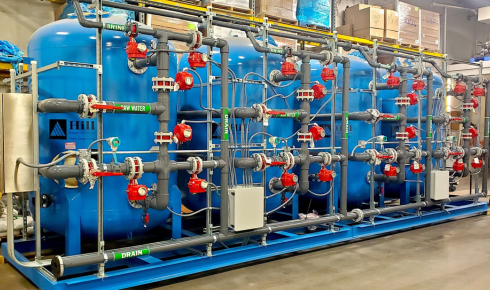
That’s why many companies eventually explore commercial water solutions designed specifically for large-scale operational needs.
Why Businesses Can’t Rely on Basic Filtration
Unlike households, businesses often deal with higher water usage and more complex demands.
A simple under-sink filter that works perfectly in a home setting isn’t designed to handle the volume or variety of challenges commercial operations face.
For instance, manufacturing processes may require precise mineral levels to avoid equipment corrosion. Food service operations must maintain consistent taste and cleanliness standards. Healthcare facilities need water that meets strict safety guidelines.
This is where specialized business water systems become essential. These systems are designed to address specific operational needs, from softening and filtration to advanced purification technologies.
They don’t just improve water — they help ensure operational reliability.
The Connection Between Water and Customer Experience
One of the most overlooked aspects of water in business is its impact on customer satisfaction.
Guests in hotels expect comfortable showers. Restaurant customers expect beverages to taste consistent and refreshing. Spa clients expect water that feels gentle on skin.
Poor water conditions can subtly undermine these expectations without anyone immediately recognizing the cause.
For example, mineral residue on glassware can make a restaurant appear less hygienic. Hard water in a salon can affect hair treatments. Chlorine odors in hospitality settings can diminish the overall atmosphere.
These experiences are tied directly to water quality, even if customers don’t consciously identify the connection.
And in service industries, small details often determine whether customers return.
How Water Quality Affects Equipment Lifespan
Beyond customer perception, water plays a critical role in protecting business infrastructure.
Scale buildup from hard water can reduce the efficiency of heating elements in boilers and water heaters, forcing them to work harder and consume more energy.
Cooling systems may experience reduced performance due to mineral deposits clogging pipes. Even plumbing networks can suffer from long-term corrosion or sediment accumulation.
These issues don’t appear overnight — but over time, they lead to higher maintenance costs and unexpected downtime.
Investing in proper water treatment helps prevent these problems, extending equipment lifespan and reducing operational disruptions.
The Financial Impact Businesses Often Overlook
Water-related inefficiencies can quietly increase operating expenses.
Higher energy consumption, frequent equipment repairs, increased cleaning chemical usage, and shorter appliance lifespans all contribute to long-term costs.
Many businesses initially view water treatment as an optional expense. But once they calculate the savings from reduced maintenance and improved efficiency, they often realize it’s actually a cost-saving investment.
Over time, the financial benefits can be substantial.
Why Water Needs Vary Across Industries
Not all businesses have the same water requirements.
A restaurant may prioritize taste and sanitation, while a manufacturing plant focuses on mineral balance to protect machinery. Healthcare facilities need stringent purification to meet safety standards, and hospitality environments emphasize comfort and consistency.
Because of these differences, there’s no one-size-fits-all solution.
Professional water analysis is usually the first step, helping businesses identify their specific challenges before implementing tailored treatment systems.
Understanding the unique needs of each operation ensures more effective results.
The Growing Awareness of Water as a Strategic Resource
In recent years, businesses have become more aware of water as a strategic asset rather than just a utility.
Environmental concerns, sustainability goals, and rising operational costs have all contributed to this shift.
Companies now recognize that managing water effectively supports both financial performance and environmental responsibility.
Improving water quality isn’t just about solving immediate problems — it’s about building long-term operational resilience.
The Bigger Picture: Water as a Foundation of Business Operations
At its core, water is woven into nearly every aspect of commercial activity.
It affects equipment performance, product consistency, customer satisfaction, and overall operational efficiency.
When water quality improves, businesses often notice a chain reaction of benefits — fewer maintenance issues, better customer experiences, and smoother daily operations.
It’s not always a visible transformation, but it’s a meaningful one.
The Bottom Line: Small Improvements, Significant Impact
Many businesses spend years addressing surface-level problems without realizing they share a common cause.
By paying closer attention to water quality and investing in appropriate treatment solutions, companies can protect their infrastructure, enhance customer satisfaction, and reduce long-term costs.