

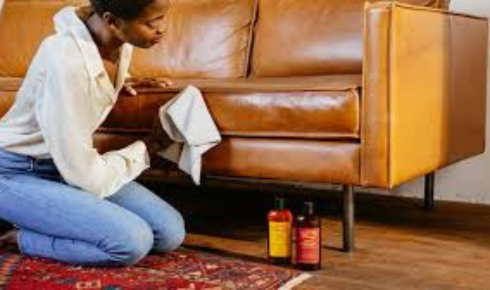
A leather sofa is more than just seating—it’s an investment piece. Done right, it ages beautifully, developing character rather than cracks. Done wrong, it dries out, fades, and starts shedding colour onto your clothes. I’ve seen both outcomes countless times, and the difference almost always comes down to care habits that seem small but compound over time.
Why Leather Needs Different Care Than Fabric
Leather isn’t fabric. It’s skin.
That single fact explains nearly every “don’t” in leather care. Leather has pores, it breathes, and it reacts to heat, moisture, and oils. Fabric sofas can be soaked, scrubbed, and deodorised aggressively. Leather can’t.
When people damage leather, it’s usually because they treat it like upholstery instead of a natural material.
Common causes of premature leather damage:
- Over-wetting during cleaning
- Harsh household chemicals
- Direct heat and sunlight
- Skipping conditioning altogether
Leather doesn’t fail suddenly. It dries slowly. Then it cracks.
The Do’s of Leather Sofa Care
✅ Do Dust and Vacuum Regularly
Dust sounds harmless, but on leather it acts like fine sandpaper.
Use a soft brush attachment once a week to remove:
- Dust from seams
- Crumbs and grit from creases
- Pet hair trapped along stitching
This prevents abrasion when people sit and move.
Pro tip: Always vacuum before wiping. Dragging dust across leather with a cloth causes micro-scratches you won’t notice—until the surface goes dull.
✅ Do Clean Spills Immediately (Gently)
Leather is stain-resistant, not stain-proof.
If something spills:
- Blot—don’t rub—with a dry, clean cloth
- If needed, lightly dampen the cloth with water
- Dry the area immediately
That’s it.
No sprays. No wipes. No panic.
The longer liquid sits, the deeper it migrates into the pores.
✅ Do Use Leather-Specific Cleaners (Sparingly)
When a deeper clean is needed—every 6–12 months for most homes—use a pH-balanced leather cleaner. These are designed to lift dirt without stripping natural oils.
Apply cleaner to the cloth, not directly to the sofa.
Work in small sections.
Wipe gently.
If the cloth turns grey or brown, that’s embedded body oils lifting out. Normal.
✅ Do Condition Leather After Cleaning
This is the step most people skip—and the one that causes cracking later.
Conditioner:
- Replenishes natural oils
- Maintains flexibility
- Reduces future staining
Think of it like moisturiser for skin. Cleaning without conditioning is like washing your hands with soap all winter and never using cream.
Condition every 6–12 months, depending on usage and indoor heating.
✅ Do Keep Leather Away from Heat and Sunlight
Heat dries leather. UV fades it.
Keep sofas:
- At least 30–40 cm away from radiators
- Out of direct sunlight where possible
If relocation isn’t an option, rotate cushions regularly to prevent uneven fading and drying.
The Don’ts of Leather Sofa Care (Where Most Damage Happens)
❌ Don’t Use Baby Wipes or Household Cleaners
This one ruins more sofas than anything else.
Baby wipes contain:
- Alcohols
- Detergents
- Preservatives
They strip protective coatings and leave residues that attract dirt. The damage doesn’t show immediately—but weeks later, colour starts lifting.
Also avoid:
- Vinegar
- Bleach
- Ammonia
- Multi-surface sprays
If it’s not designed for leather, don’t gamble.
❌ Don’t Over-Wet the Leather
Leather hates saturation.
Too much water causes:
- Stiffness
- Shrinkage
- Water marks
- Long-term cracking
If you see moisture sitting on the surface, you’re using too much.
❌ Don’t Scrub Stains Aggressively
Scrubbing removes dye and protective coatings faster than stains.
If a mark doesn’t lift easily, stop. That’s a sign it needs professional treatment, not more force.
❌ Don’t Sit on Leather Straight After Conditioning
Conditioner needs time to absorb.
Give it at least:
- 1–2 hours before use
- Overnight if possible
Sitting too soon transfers oils to clothing and creates uneven patches.
❌ Don’t Ignore Small Damage
Tiny cracks, fading patches, or stiffness are early warnings.
At that stage, restoration is easy.
Wait too long, and repair becomes expensive—or impossible.
How Often Should You Clean and Condition a Leather Sofa?
There’s no one-size-fits-all answer, but here’s a realistic guide:
Household Type
Clean
Condition
Low use, no pets
Every 12 months
Every 12 months
Family home
Every 6–9 months
Every 6–9 months
Pets / heavy use
Every 6 months
Every 6 months
Central heating running most of the year? Shorten those intervals.
A Common Mistake I See in Dublin Homes
This happens a lot.
Someone notices their leather sofa looking dull. They Google a “DIY leather cleaner,” mix vinegar and water, scrub it down, and feel proud.
Two months later:
- The leather feels stiff
- Colour looks patchy
- Cracks start appearing where people sit
By then, the protective layer is gone.
This is why professional services like Happy Clean Dublin always test products first and finish with conditioning. The goal isn’t just clean—it’s longevity.
Leather Types Matter (A Lot)
Not all leather sofas are the same.
Pigmented / Protected Leather
- Most common
- More stain-resistant
- Easier to maintain
Aniline / Semi-Aniline Leather
- Softer, more natural look
- Absorbs liquids quickly
- Requires extra care
If you’re unsure what type you have, assume it’s sensitive and clean conservatively.
When to Call a Professional Instead
DIY care has limits.
Call a professional if:
- Colour is transferring onto clothes
- Leather feels stiff or brittle
- There are visible cracks forming
- Strong odours won’t lift
- Stains won’t budge without scrubbing
A proper professional clean and condition can add years to a sofa’s life—far cheaper than replacement.
Final Thoughts: Leather Rewards Respect
Leather isn’t high-maintenance—but it is unforgiving.
Treat it gently.
Condition it regularly.
Keep it away from heat and harsh chemicals.
Do that, and your sofa won’t just survive. It’ll age well—like it was meant to.
And if you ever find yourself tempted to grab a baby wipe?
Step away from the sofa.